Zander, Boston Phil Youths wrap season with rousing American program
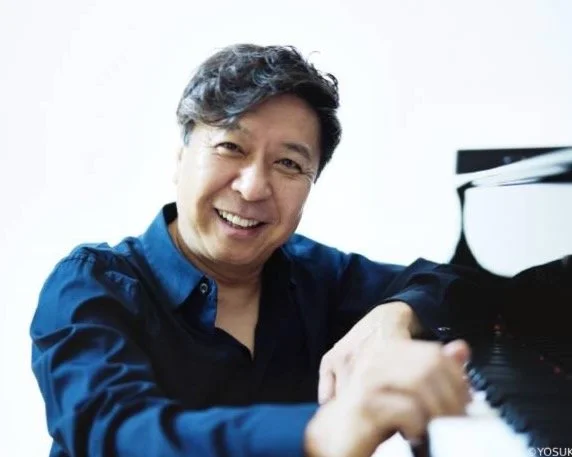
Mokoto Ozone performed Rhapsody in Blue with Benjamin Zander and the Boston Philharmonic Youth Orchestra Sunday at Symphony Hall.
The season finale of the Boston Philharmonic Youth Orchestra, led by Benjamin Zander with soloist Makoto Ozone, filled Symphony Hall with an ambitious program of American composers Sunday night.
The concert began with John Harbison’s concise 1985 work Remembering Gatsby (Foxtrot for Orchestra), inspired by F, Scott Fitzgerald’s novel. The opening is bold and declamatory, with a steely orchestration of high strings and brass, evoking the green light at the end of Daisy’s dock.
The young musicians caught the foxtrot’s swing immediately and moved as one to create a dynamic jazz atmosphere. The percussion was steady and kept in scale while the strings punctuated the texture with tasteful glissandos and trills. The brass section balanced with straight mutes, infusing the piece with a jovial feeling that carried through to the end.
Gershwin’s Rhapsody in Blue followed in a reading that felt wholly reinvented by Zander (conducting from a seated position due to an injured foot) and jazz pianist Makoto Ozone.
In the familiar work’s cadenza sections, Ozone freely improvised, weaving in themes of Gershwinand reimagining them in a bluesy idiom. The reading departed significantly from a typical performance, yet the young musicians were fully attentive partners, matching Ozone’s interpretive choices. The conductor and pianist built to a climactic finish in the final pages, cultivating a unified sound that energized the hall.
The BPYO players showed maturity and professionalism in this challenging interpretation. The famous opening clarinet solo was delivered with clean precision, and the brass handled Gershwin’s intricate writing with ease.
Ozone followed the Gershwin with two encores: a short but swagger-filled jazz improvisation with bassist Madalena Kozol, and a poignant rendition of Oscar Peterson’s Hymn to Freedom.
Aaron Copland’s Symphony No. 3 closed the evening. That a youth ensemble would tackle such a substantial work is itself notable, in this first (and it seems, last) performance for either Boston Philharmonic orchestra.
Copland’s symphony is extremely challenging, demanding sustained focus and tight coordination to capture the rhythmic complexities, deceptively simple lyricism and roaring fortissimos. Zander shaped the opening movement’s overlapping melodic lines with seamless cohesion, each line emerging naturally from the dense texture.
The Allegro molto second movement was stirring, played with bite and confidence. Zander beckoned for more, encouraging the orchestra to emphasize the constant timbral shifts. This movement can invite chaos, but the players remained rhythmically locked and focused.
The most impressive playing of the evening came in the slow movement, where the strings developed the first movement’s theme contrapuntally, with support from brass and percussion. The exposed counterpoint left no room for textural blur or wavering intonation, and the young musicians maintained absolute clarity.
The famous Fanfare for the Common Man, which opens the fourth movement, arrived stately and polished. The string section navigated the symphony’s grueling syncopations with dedication, and their effort paid off as the orchestra coursed through the closing pages with joyful splendor.
As an encore, the orchestra offered “Nimrod” from Elgar’s Enigma Variations—a piece traditionally played as a tribute and farewell. With one season remaining before the Boston Philharmonic’s planned closure in June 2027, the choice took on particular resonance.
This review was originally published on the Boston Classical Review